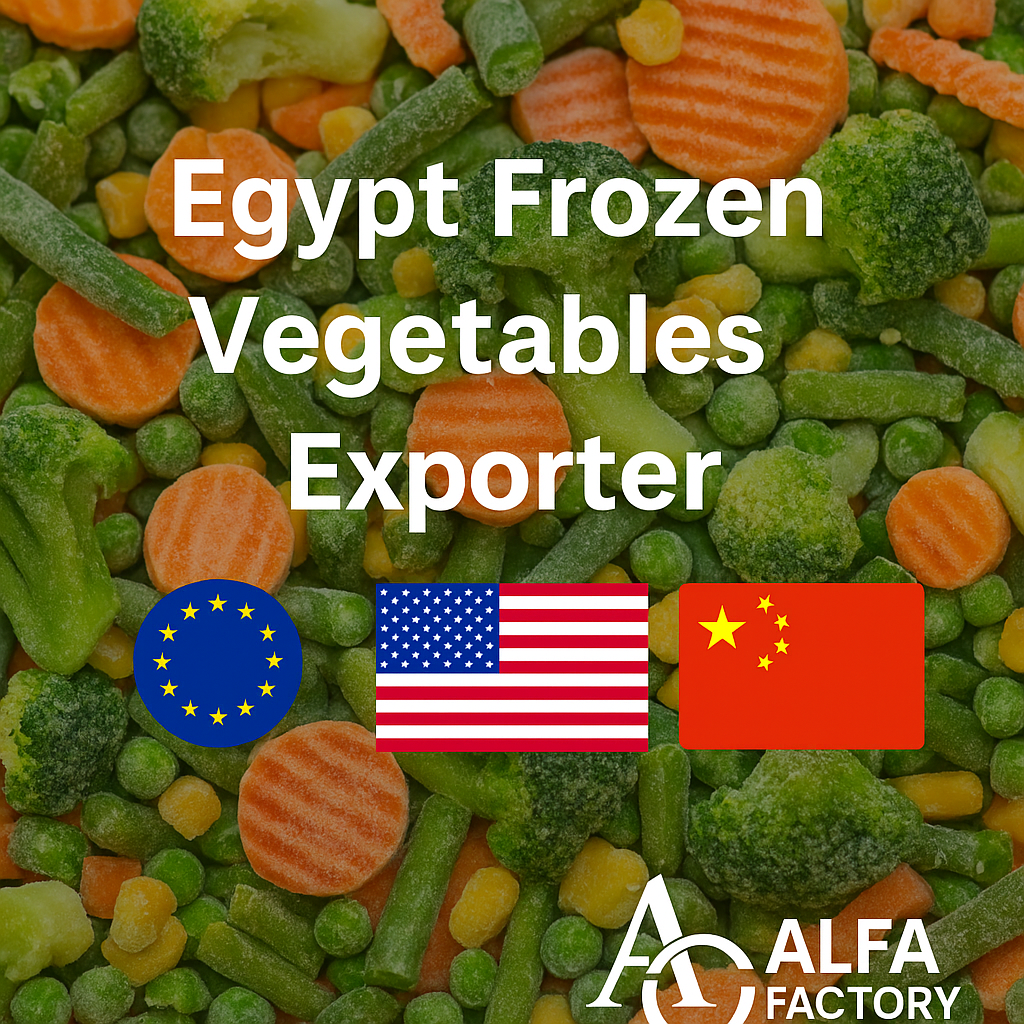
Egypt’s Growing Strength in IQF Frozen Vegetables Export | A Complete Guide to Egypt’s Food Export Industry
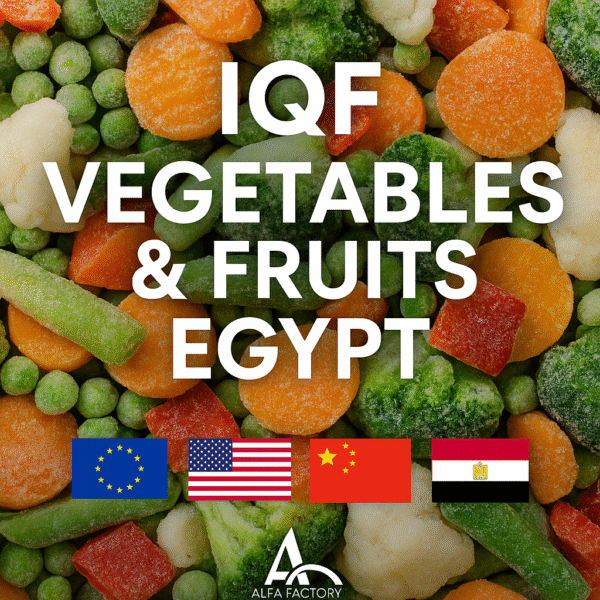
Egypt has emerged as one of the most reliable and competitive sources of frozen vegetables worldwide. Over the past decade, the country has built a strong foundation in agriculture, food processing, and export logistics, positioning itself as a key partner for markets in Europe, the United States, and China.
As demand for high-quality frozen vegetables continues to grow, many importers now look toward Egypt for stable supply, advanced IQF technology, and cost-efficient production. This article explores why Egypt has become a major player in the global frozen food industry and what makes its factories stand out.
1. Egypt Food Export Company Landscape
Egypt’s food export sector has developed quickly thanks to:
-
Vast agricultural regions such as Beheira, Fayoum, Sharkia, and Beni Suef
-
Access to year-round vegetable production
-
A rapidly modernizing manufacturing sector
-
Strong cold-chain and port infrastructure
A typical Egypt food export company today operates with:
-
IQF freezing tunnels
-
Metal detectors and optical sorters
-
High hygiene standards
-
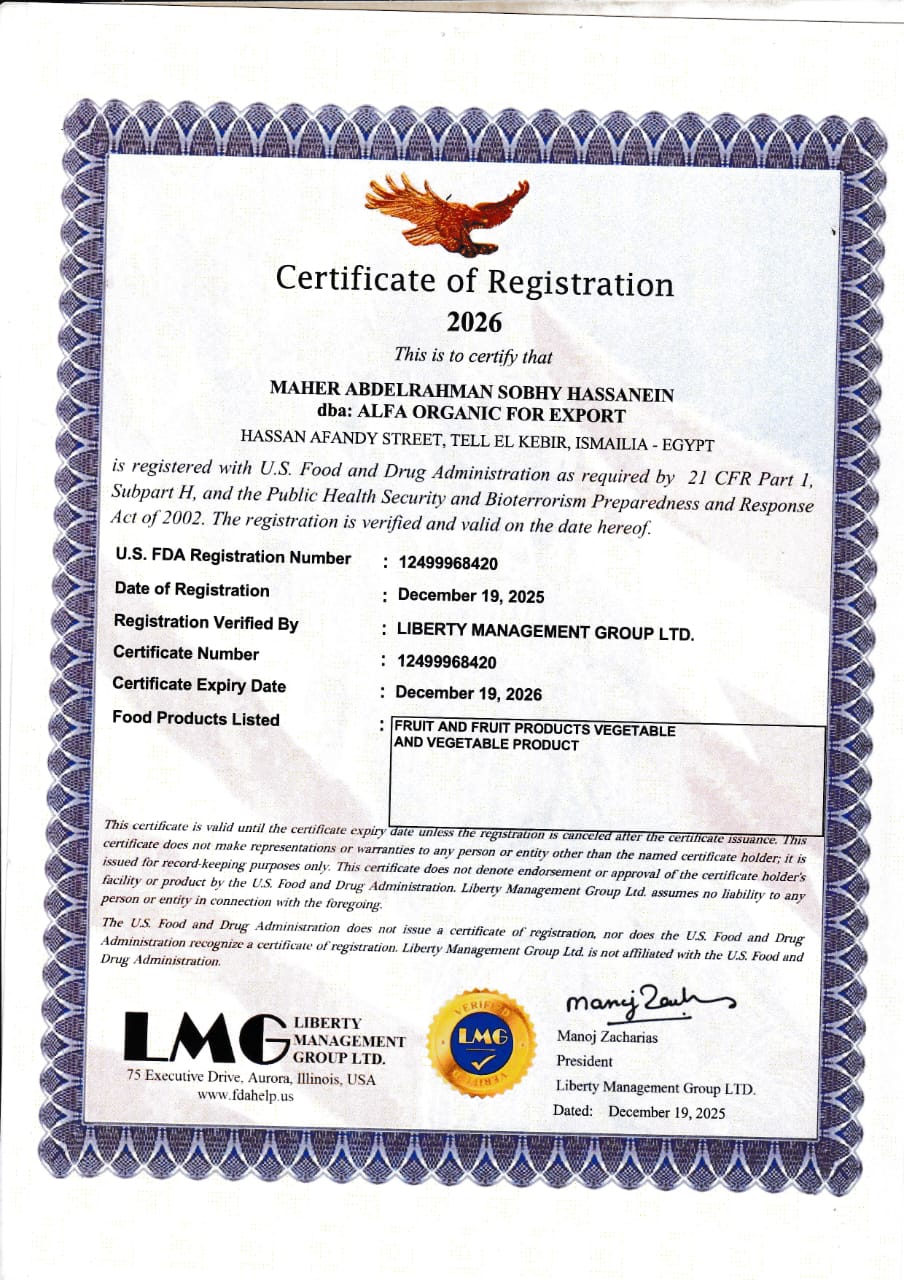
BRC, HACCP, and ISO certifications
-
Cold-storage warehouses
-
Professional export documentation teams
This combination allows Egyptian exporters to meet strict requirements from European and American markets, while offering competitive prices.
2. The Best IQF Factories in Egypt
The best IQF factories in Egypt share several characteristics that distinguish them from regional competitors:
• Advanced IQF Freezing Technology
Fast freezing helps retain color, texture, and nutritional value.
• Strong Sorting Systems
Manual grading plus optical sorting ensure uniform quality.
• Export-Grade Certifications
Most top factories hold BRC, HACCP, and ISO 22000.
• Flexible Packaging Options
Bulk 10–20 kg cartons or private-label retail bags.
• Large Production Capacity
Multiple growing seasons allow continuous supply during the year.
These factories produce a wide range of export vegetables including green beans, peas, broccoli, cauliflower, carrots, mixed vegetables, and more.
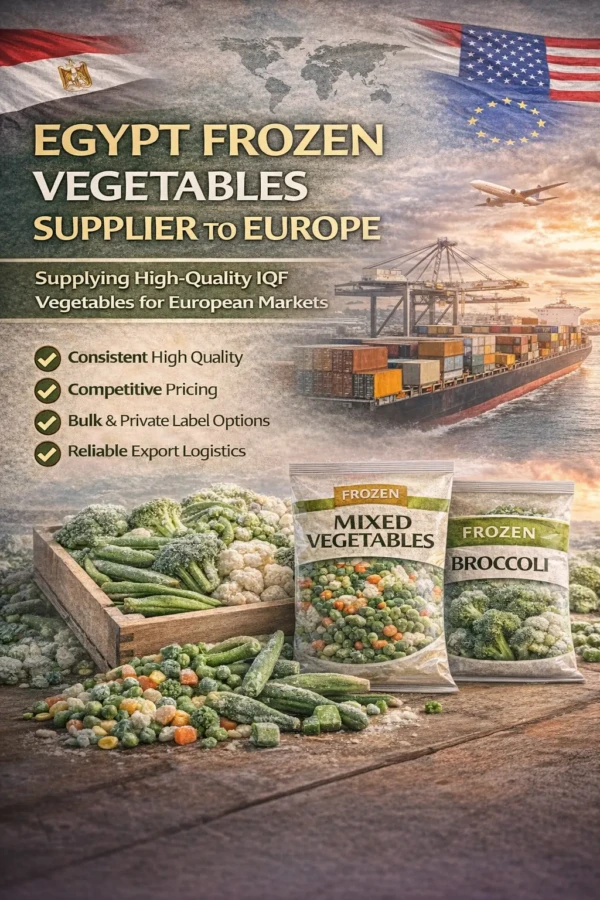
3. Egypt Frozen Vegetables Supplier to Europe
Europe remains one of the largest destinations for Egyptian frozen vegetables.
Buyers in countries such as Germany, Italy, Spain, the Netherlands, Poland, and the U.K. rely on Egypt due to:
-
Consistent crop quality
-
Competitive pricing
-
Quick shipping routes through the Mediterranean
-
Compliance with EU food-safety regulations
-
Year-round availability
-
High acceptance of IQF peas, beans, broccoli, and mixed vegetables
This has made Egypt one of the leading frozen vegetables suppliers to Europe over the past decade.
4. Egypt Frozen Vegetables Exporter to USA
Egypt’s presence in the U.S. frozen food market is steadily growing.
American importers increasingly choose Egypt because:
-
IQF factories follow FDA-compliant production standards
-
Egyptian vegetables maintain excellent texture after cooking
-
Pricing is more competitive than many South American suppliers
-
Exporters provide strong documentation and reliable cold-chain handling
Popular Egyptian products for the U.S. market include:
-
IQF peas
-
Mixed vegetables blends
-
Frozen okra
This makes Egypt a rising frozen vegetables exporter to the USA with a promising growth trajectory.
5. Egypt Frozen Vegetables Exporter to China
China has also become a major buyer of Egyptian frozen vegetables, especially in:
-
Ready-meal factories
-
Food-service suppliers
-
Large distribution companies
Egypt is attractive to Chinese importers due to:
-
Very competitive pricing
-
Strong consistency in product size
-
Reliable freezing quality
-
Ability to supply large volumes quickly
-
Special expertise in beans, peas, okra, spinach, and broccoli
This demand has made Egypt an increasingly important frozen vegetables exporter to China.
6. Key Advantages of Egyptian IQF Frozen Vegetables
• Competitive Production Costs
Lower labor and energy costs allow export prices that outperform many global competitors.
• High Agricultural Quality
Egypt’s climate and soil produce vegetables with excellent color and natural taste.
• Advanced Export Logistics
Ports like Alexandria, Damietta, and Port Said offer fast shipping routes.
• Strong Certifications
Egypt’s leading factories hold globally recognized safety and quality certifications.
• Flexibility for Large Orders
Factories can handle bulk orders and private-label cooperation for retail chains.
7. Customer Story – Real Importer Experience
A food distributor in Germany was sourcing broccoli and peas from Eastern Europe but faced increasing prices and inconsistent supply. After testing products from an Egyptian IQF factory, they reported:
-
Uniform size and clean sorting
-
Stable green color after cooking tests
-
A 30% reduction in purchasing costs
-
A smoother export documentation process
Within three months, they shifted 70% of their frozen vegetable imports to Egyptian suppliers.
8. Reviews
⭐⭐⭐⭐⭐ “Reliable quality and fast shipments. Egypt is now our preferred source for green beans and peas.” – Italy
⭐⭐⭐⭐⭐ “Great freezing quality with excellent texture after cooking.” – USA
⭐⭐⭐⭐⭐ “Pricing is very competitive, especially for bulk orders.” – China
⭐⭐⭐⭐⭐ “Private-label packaging was done perfectly for our retail line.” – UAE
9. Frequently Asked Questions (FAQ)
Q1: Are Egyptian frozen vegetables accepted in Europe and the USA?
Yes. Many factories are certified with BRC, HACCP, and ISO, meeting EU and FDA standards.
Q2: Do Egyptian suppliers offer private-label services?
Yes. Retail bags, food-service cartons, and customized artwork are available.
Q3: What are the top exported vegetables from Egypt?
Green beans, peas, broccoli, cauliflower, carrots, okra, spinach, and mixed vegetables.
Q4: What is the shelf life of IQF vegetables?
Most products remain stable for up to 24 months at –18°C.
Q5: Why are Egyptian export prices competitive?
Lower production costs, multiple growing seasons, and efficient logistics.